 |
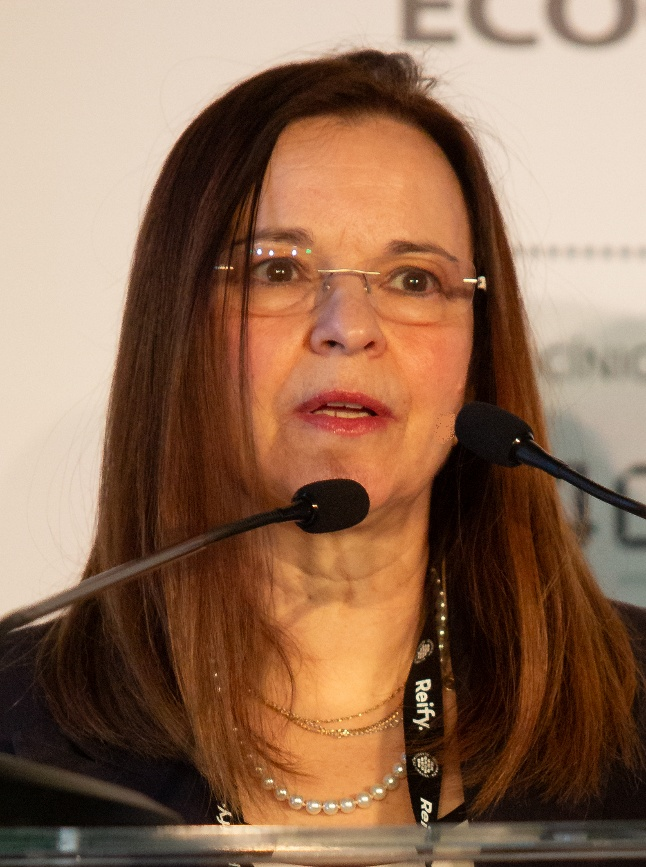
Wael A. Altabey
Alexandria University, Alexandria, Egypt
Prof. Wael A. Altabey is a full professor at department of
Mechanical Engineering, Faculty of Engineering, Alexandria
University, Alexandria, Egypt. Before that he was an associate
professor between Dec. 2018 to Dec. 2024 at school of Engineering
Mechanics, Southeast University, Nanjing, China, and research
associate professor at National and Local Joint Engineering Research
Center for Basalt Fiber Production and Application Technology,
Southeast University, Nanjing, Jiangsu, China, after completing a
postdoctoral research fellowship for two years (2016-2018).
Since 2016 his researches have focused on the utilization of
Artificial Intelligence (AI) based schemes for structural health
monitoring (SHM) and Non-Destructive Testing (NDT) for damage
classification, detection, diagnosis, prediction, dynamic response analysis, digital twins, and Reliability
evaluation in composite, and steel Structures (such as aircraft, wind turbines, pipelines, plates, bridges
and industrial machines)
He has listed in Stanford/Elsevier List of World's Top 2% Scientists for five years starting in
2020, until now. He participated in several research activities, which achieved from Natural Science
Foundation of China (NSFC), Alexandria University Research Support Initiative (Alex-RSI) and private
sectors in China and Egypt. He recorded a performance results in March 2026 as
3,889 Citations at
G.Scholar (h-index 35), and 3,351 Citations at Scopus (h-index 32).
He has authored over 250 refereed papers, including over
150 journal articles; has published
15
scientific books, and 50 book chapters in archival volumes; and has been the guest editor of
15 journal
volumes and proceedings. He has been a member of the scientific committee of numerous conferences
and workshops in the field of artificial intelligence, mechanical, materials, and civil engineering.
Speech title "A Smart and
Sustainable Infrastructure Framework
for Establishing a Resilient
Environment: Strategic Overview" Abstract—Over the past two decades, rapid economic growth and the increasing interconnectivity
driven by globalization have significantly expanded the scale and complexity of infrastructure
systems. As these systems grow, they require more robust integration between their subsystems to
effectively respond to natural and human-induced disasters, regardless of geographic location. This
increased complexity has made infrastructure systems more susceptible to various risks, with
heightened vulnerability to unforeseen events. A resilient infrastructure system is characterized by
its ability to withstand and recover from disruptions whether from technological failures, natural
disasters, or other external shocks. These disruptions, whether long- lasting or temporary, can
change system performance in ways that either enhance, maintain, or degrade it. Typically, extreme
events and disasters tend to intensify the risks faced by systems, reduce their robustness, and have
detrimental effects on both the infrastructure and the communities that depend on it. This paper
introduces a framework for evaluating the infrastructure resilience systems and essential resources,
blending both quantitative and qualitative approaches. The infrastructure resilience is a
multidisciplinary field, encompassing a wide range of studies that aim to improve system robustness.
Properly designed resilient systems are capable of maximizing their performance by effectively
managing limited resources and optimizing energy flow within constrained timeframes. As the scale
of these systems increases, the interdependencies between various components play a crucial role in
determining the most efficient network configurations and long-term performance evolution. By
establishing consistent criteria for evaluating infrastructure network resilience, this paper seeks to
provide a comprehensive methodology for assessing and enhancing the robustness of modern
infrastructure systems. In order to develop a new evaluation methodology for assuring a given
resilient system and satisfaction, a more comprehensive methodology for resilience evaluation is
needed and this review attempts to identify some of these requirements and mandates.
|
 |
Merve Akbaş Kaplan
Istanbul Technical University (ITU), Türkiye
Dr. Merve Akbaş Kaplan is a
Research Assistant in the Department
of Civil Engineering at Istanbul
Technical University (ITU), Türkiye.
Her academic background and research
activities focus on soil mechanics,
geotechnical engineering,
geotechnical earthquake engineering,
sustainable construction materials,
and pavement geotechnics.
Her recent research mainly addresses
the engineering performance and
sustainable use of recycled concrete
aggregates and
construction-and-demolition waste
materials in road base and subbase
applications. Her studies include
laboratory characterization,
freeze–thaw durability, resilient
modulus and permanent deformation
behavior, environmental assessment,
and numerical modeling of recycled
aggregate systems. She has also
worked on earthquake-related
geotechnical problems, including
liquefaction mitigation and the use
of recycled materials in
post-earthquake reconstruction
strategies.
Dr. Akbaş Kaplan's research aims to
support sustainable and resilient
infrastructure by combining
experimental testing, numerical
analysis, and data-driven evaluation
methods. In addition to her research
activities, she contributes to
academic teaching and institutional
duties at Istanbul Technical
University. In recognition of her
contributions, she received the
Highest Publication-Based
Performance Award (ITU, 2024) and an
Outstanding Achievement Award in
Teaching Assistance in Engineering
(ITU, 2023).
Speech title "Experimental
Evaluation and Rapid Decision
Support Framework for Utilizing
Kahramanmaraş Earthquake Debris in
Road Reconstruction"
Abstract—The February 6, 2023
Kahramanmaraş earthquakes generated
massive volumes of construction and
demolition waste (CDW), posing
severe environmental challenges
while creating an urgent demand for
materials in post-disaster
infrastructure recovery. This study
investigates the feasibility of
utilizing recycled concrete
aggregates (RCA) derived from
earthquake debris in road
base/subbase applications and
introduces a rapid algorithmic
decision support framework for
material assessment. An extensive
experimental program was conducted
on natural aggregates (NA) blended
with RCA at replacement ratios of
0%, 25%, 50%, 75%, and 100%. Key
properties—including Los Angeles
abrasion, magnesium sulphate
soundness, water absorption, and
California Bearing Ratio (CBR)—were
systematically evaluated. The
results indicate that mixtures with
up to 50% RCA exhibit exceptional
performance, achieving a peak soaked
CBR of 212%, which exceeds
conventional aggregates. However,
higher RCA contents (75–100%)
resulted in reduced mechanical
performance and increased
environmental sensitivity,
indicating a need for stabilization.
To bridge the gap between lab
findings and urgent field needs, a
logic-based classification framework
was developed using the experimental
dataset. The framework demonstrated
complete consistency with laboratory
results, indicating that readily
measurable index properties can
reliably categorize material
suitability. By eliminating the
conventional CBR soaking period, the
proposed framework offers
approximately 76% reduction in
decision-making time. This study
confirms that Kahramanmaraş
earthquake debris can be effectively
recycled, providing a transferable,
rapid, and transparent tool for
sustainable post-disaster material
management. |